Background of “Marriage of ANANSEWA” by Efua T. Sutherland
Background of The Marriage of Anansewa by Efua T. Sutherland
The Marriage of Anansewa is a play written by the renowned Ghanaian playwright, poet, and cultural activist Efua Theodora Sutherland. The play is rooted deeply in African oral tradition and was developed as part of Sutherland’s lifelong commitment to preserving and modernising indigenous African storytelling forms. First performed in the 1960s and later published in book form, the play reflects post-independence Ghanaian society, where traditional values, modern education, and economic pressures intersect. Sutherland uses drama not merely for entertainment but as a tool for social education, cultural preservation, and moral reflection.
The origin of the play lies in the Anansesem tradition of the Akan people of Ghana and parts of West Africa, including Togo and Côte d’Ivoire. Anansesem refers to folktales centred on Ananse the spider, a trickster figure known for his intelligence, cunning, and ability to manipulate situations to his advantage. In these folktales, Ananse often represents the ordinary human being, exaggerated and distorted to expose human weaknesses such as greed, ambition, pride, and deception. The stories are usually humorous, yet deeply instructive, using laughter as a means of social criticism.
In Akan folklore, the spider, Ananse, is not merely an animal but a symbolic figure. He embodies wit, creativity, and survival instincts in a harsh world. However, his cleverness is often morally ambiguous. While he succeeds through intelligence rather than physical strength, his schemes frequently collapse due to overreaching ambition. This dual nature of Ananse as both admirable and flawed makes him a powerful vehicle for moral lessons. Efua T. Sutherland adapts this spider-trickster tradition into a human character, Pa Kweku George Ananse, whose behaviour mirrors that of the folkloric spider.
Sutherland reworks Anansesem into a dramatic form she calls Anansegoro, a fusion of traditional storytelling and modern theatre. In Anansegoro, narration, music, dance, audience participation, and commentary are integrated into the dramatic action. Characters such as the Storyteller, Players, and Property Man reflect this oral performance style, breaking the fourth wall and reminding the audience of the play’s folkloric roots. This approach allows the play to function both as a modern drama and as a continuation of African oral performance traditions.
The spider motif is central to the plot of The Marriage of Anansewa. Like the spider of folklore, Ananse spins a complex web of deception by arranging multiple suitors for his daughter simultaneously. He manipulates letters, photographs, gifts, and rituals, carefully controlling information to serve his own interests. His actions echo the spider’s method of trapping prey—quietly, cleverly, and patiently. However, as in traditional Anansesem, Ananse’s schemes nearly collapse, and his success remains uncertain and morally questionable.
Beyond folklore, the play reflects the social and economic realities of post-independence Ghana. Poverty, unemployment, materialism, and the desire for quick wealth influence Ananse’s actions. Marriage is portrayed not only as a cultural institution but also as a means of economic advancement. Through satire, Sutherland criticises parents who exploit their children, the vanity of the nouveau riche, and a society that rewards cunning over integrity. At the same time, she presents women navigating patriarchal structures, balancing obedience with agency.
In conclusion, The Marriage of Anansewa emerges from a rich blend of African oral tradition, folkloric symbolism, and modern social commentary. By transforming the spider trickster of Anansesem into a human character within contemporary Ghanaian society, Efua T. Sutherland creates a play that is humorous, culturally grounded, and morally instructive. The background of the play therefore lies not only in its literary origins but also in its role as a mirror through which society examines its values, contradictions, and aspirations.

The mid western region was created out of the ___________ in 1963.
The support of the Felahin help Mohammed Ali ___________
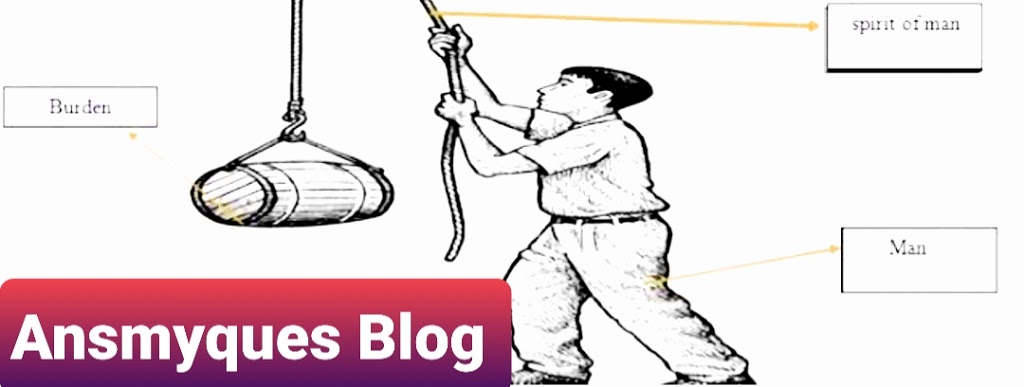
THE PULLY BY GEORGE HERBERT: FULL ANALYSIS/SUMMARY, THEMES AND FIGURES OF SPEECH
About Author

Ibkemmanuel
Hi, I'm IBK Emmanuel, A 500 level student at University of Lagos, Entrepreneur, Podcaster, Tutor and also Vlogger inter Alia, and I welcome you to the about me page of our lovely Note : UNILAG Post UTME 2024 is out from 5th of August- 23rd of August! Register with us now by texting 08130184805 website, I hope you have a good experience navigating around so far, please if there is any question, you can with all pleasure ask, and i will in my best interest answer all your questions. We also register student for any form of examination ranging from GCE, WAEC, JAMB, P.UME, JUPEB and so on, we'd like you business with us as we deliver you the best service. Not to forget we also conduct both online (free and paid for) and offline Tutorials (home service for people around Lagos, the banner have have some of our service). You can contact us on : WHATSAPP : 08130184805 PHONE : 08130184805 FACEBOOK : IBKINTELLECT page